Showing posts with label Endocrine system. Show all posts

Friday, 3 March 2017

Someone help! I’m 12 years old and taller than my 5.7 ft. parents (By S.Pierre)

  Majority, if not all, of us who have made it into adulthood, have gone through puberty.

  For the past seven years of my life, I’ve learnt and experienced that rapid growth occurs during puberty. Like all natural processes in the body, growth is of great importance since it prepares the body for reproduction, efficient cell replacement and the strain of adulthood. Seeing that growth is important, we measure it through height and dry mass.

  At a recent group meeting, I heard a huge bass voice. That’s a frightening voice I thought. I started looking for the source of that voice until I came across a giant kid……do 6 ft. kids even exist?  The kid continued talking to a lady next to him.  Somehow, the conversation took a turn for the worst. He started crying to the point where his words became confusing and all I heard were “can’t stop growing”, “maybe it’s normal even though the normal is 4.8 ft.”, “I grew 8 inches in a year” and “I’m 12 and my parents are 5.7 ft.”  The kid believed that his growth was normal but it wasn’t.  


  As mentioned before, height is used to measure growth, but that kid’s height as well as growth rate wasn’t normal. By medical standards, he was taller than 99.9% of the children his age. An abnormal and rapid increase in height that occurs before adulthood is usually due to a non cancerous tumor which affects the endocrine system’s pituitary gland. This condition is known as gigantism.

  During gigantism, the tumor cells in the anterior pituitary lobe produce more Growth Hormone (GH) than normal. As a result, the release of hypothalamic Growth Hormone Inhibiting Hormone (GHIH) and Growth Hormone Releasing Hormone (GHRH) can no longer balance GH levels so protein synthesis and the use of fat for fuel also become abnormally high. In addition to this, the liver and other tissues are stimulated to release Insulin-like Growth Factors (IGFs) at much higher rates.  Simply put, growth occurs everywhere (skeletal muscles, bones etc.) and highly manifests itself as rapid upward growth in children, because of their long bones’ unsealed epiphyseal growth plates. Besides rapid upward growth, other signs of gigantism include:
  •          Large hands and feet
  •          A prominent jaw and forehead
  •          Weakness and headaches
   

                                       Picture of Pituitary Gland  


                               Picture of Growth Hormone's Effects


                        Picture of an Immature and Mature Growth Plate 


  The body of a person suffering from gigantism doesn’t get a chance to adapt to the growth. Untreated gigantism can result in health problems such as stroke, nerve damage, weak muscles etc., so medical intervention is always needed.

  Zooming in on the kid! I rushed to him in order to say that he should see a doctor. If the doctor thinks the same as I do, he/she would recommend:
  • Blood testing:  In this test, GH and Insulin-like Growth Factor-I (IGF-I) levels are measured. If GH levels are above normal compared to that of the usual amount for age, (more than 0-20 ng/mL or 0-904 pmol/L for 12 yr olds), gigantism is suspected. Increased IGH-I levels also indicate gigantism.
  • Oral Glucose Tolerance Test (OGTT): In this test, a person is given 75 grams of glucose solution. If blood GH levels remain the same or do not drop to less than 1 ng/ml, GH levels are too high.
  • Magnetic Resonance Imaging (MRI):  In this test, a scan uses magnetic waves to create images of the pituitary gland. If a dense, whitish and abnormal mass is found within the pituitary gland's region, a tumor is present.

  If each test, especially the MRI comes out positive for gigantism, the doctor would treat the pituitary tumor by surgical removal, radiation therapy and/or medicines - specifically Somatostatin analogues which suppress GH secretion. Medicines are used when other forms of treatment risk the patient's life or gigantism occurs without a tumor. Shockingly, the 12 yr. old child might still grow more after treatment!!!!!


                     Picture Showing Methods of Treating Gigantism

  Remember, too much of anything has always been bad. If you notice abnormal growth in a child, you should advise the child to seek medical attention. To read more about gigantism, click here and then click here.


Saturday, 11 February 2017

Osteoporosis: Tired bones or tired hormones?? (By: V.Lake)

Whenever I have time on my hands  I always try to visit my grandma. For the past few visits she has been complaining about aching bones and sore feet. She said it even hurts when she sits down too fast! I urged her to visit a doctor, but you know old folks... they always want to try out some herbal medicine or local bush teas to remedy all and any kind of illnesses.


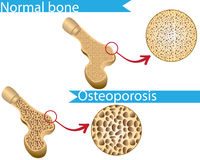
After doing that and still not feeling any relief, she finally decided to stop ignoring my advice and visit her doctor. The next time I went to see her she was telling about the doctor visit. The doctor diagnosed her with osteoporosis. Osteoporosis is a progressive bone disease where the bones become extremely weak and brittle. This makes them much more susceptible to breaks and fractures. Fortunately the disease was in an early stage, so overall it was a mild case.


 My grandma was prescribed calcium supplements, estrogen pills and pain killers. As she was reading the medicine labels, with a confused look printed on her face she blurted out, "Estrogen?!?! At my age that crazy doctor thinks I'm pregnant.. really?? Why he give birth control pills?!"
I could not contain my outbursts of laughter 😂😂.

She was wrong on so many levels!!

I began to educate her about her illness and I explained why the doctor prescribed the estrogen pills. After all... what's the point of studying biology for two years at college if you cant even help those around you right?

Firstly, it is natural for bone loss to occur with aging. The endocrine system and more specifically hormones play an important role in bone health; under-secretion or over-secretion of certain hormones can cause osteoporosis. Bone formation is affected by the sex hormones: testosterone and estrogen in both males and females. The hormones aid in maintaining bone mass and as we age their secretion dwindles. Therefore, the rate of bone loss increases.

In my grandma's case her estrogen level was low due to her age and menopause (ovaries secrete less estrogen). Hence why her bones were becoming weaker. The doctor prescribed the pills, as a form of hormone replacement theory, in combination with calcium supplements  to make her bones stronger. Calcium is responsible for giving bones its hard, strong nature.

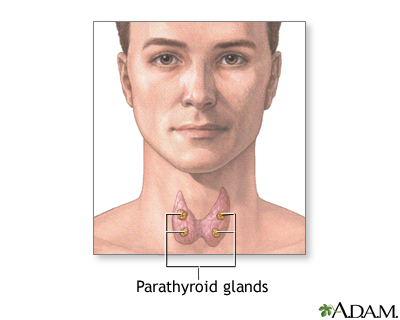
Other endocrine/ hormonal causes of osteoporosis include hyperparathyroidism. This is a case where the parathyroid glands, located in the cervical region, become overactive and secrete excess parathyroid hormone (PTH). The over activity is usually as a result of a tumor on one or more of the parathyroid glands and excess PTH secretion rapid bone degradation in order to release calcium into the bloodstream. The excess breakdown of bones causes them to become extremely weak as they lose their hardness and density.

After these explanations my silly grandma realized the doctor wasn't crazy after all. Also, many people believe that osteoporosis is strictly a bone disease and fail to realize that in most cases the underlying cause is some fault with the endocrine system. 

References :
  1. Castro, J. (2013). 11 Surprising Facts About the Endocrine System. Live Science. Retrieved 11 February 2017, from http://www.livescience.com/40386-endocrine-system-surprising-facts.html
  2. The connections between Osteoporosis & the Endocrine system. Hormone.org. Retrieved 11 February 2017, from http://www.hormone.org/diseases-and-conditions/bone-health/hormones-and-your-bones


Tuesday, 24 January 2017

Sugar! Sugar! Where art thou Sugar?? (by T. Christian)

In a group lunch setting I was in recently, I noticed a gentleman removing all the plantain slices from his plate. That's odd I thought...I mean who doesn't like plantains?

He proceeded to do some swaps with the lady next to him, his plantain for her dasheen slices. Somehow, the reason behind his need to swap became a topic of discussion at the table. He announced that his fasting blood glucose level, which he had tested the day before apparently, was near 300 mg/dL! This is diabetes high.

His removal of the plantains from his plate therefore, and replacement with the dasheen, was to attempt to curb this high blood glucose. It all made perfect sense to him...take out the sweet stuff and abracadabra, the sugar is gone!

Not quite!

Although there are minor variations in schools of thought on what the fasting blood glucose of a non-diabetic should be, the general consensus is that it should be below 110 mg/dL. Glucose is a simple sugar, a monasaccharide, which is the building block for complex carbohydrates such as starch. Glucose is important to us because we use it as our respiratory substrate, and hence is responsible for providing us with energy to carry out our daily functions.

However, someone with impaired glucose metabolism, that is a diabetic, is unable to utilize the glucose which may be present in the blood, causing the levels of it in the blood to be higher than normal.

The hormone insulin is the culprit...either an inability to produce it (Type 1 diabetes) or general resistance to it and/or reduction in its production (Type 2 diabetes). If insulin is functional and present in sufficient quantities, then it shuttles the glucose into our cells making it available for use as the respiratory substrate. Without this hormonal shuttle, the glucose remains in the blood stream, creating interesting pathological results over long periods of time such as loss of nerve function and glaucoma.

But back to the plantains! Why was the gentleman making a sad mistake? Glucose, "sugar" as we call it, doesn't only show up in sweet foods. Starchy foods are essentially just glucose waiting to be broken down by our very capable digestive enzymes. So the dasheen slices and the plantain slices...and I forgot to mention the whole heap of rice which was also in the plate, would have the same effect in further elevating his already elevated blood glucose.

So the next time you're eating, and trying to be moderate in your sugar intake...don't trust your taste buds to identify tricky old glucose. It's hidden in those carbohydrate rich foods. Don't be fooled. It doesn't have to taste sweet to raise your "sugar."